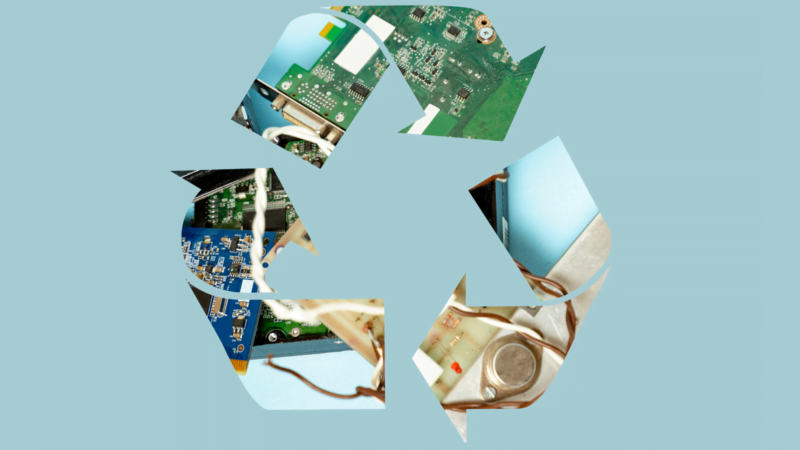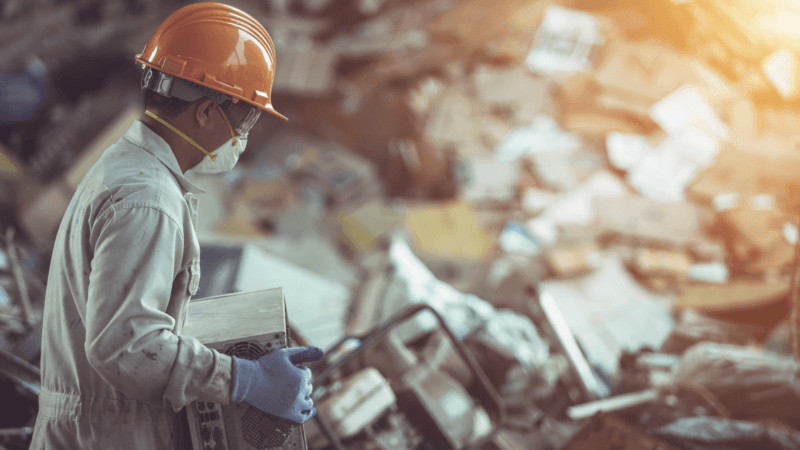

Computers, monitors, printers, lighting, cables and electrical equipment eventually reach the end of their useful life.
But for businesses, disposing of them is not as simple as putting them into a general waste container.
Electrical waste is governed by the Waste Electrical and Electronic Equipment Regulations, commonly known as the WEEE Regulations, alongside wider waste-duty-of-care and hazardous-waste requirements.
For businesses, good WEEE compliance starts with identifying what you have, establishing whether it is hazardous and ensuring it is transferred to an authorised organisation with the correct documentation.
RJS Waste Management provides specialist WEEE collection and recycling services for businesses disposing of IT equipment, office electronics, appliances, lighting and other electrical waste.
What Are the WEEE Regulations?
The Waste Electrical and Electronic Equipment Regulations 2013, as amended, are designed to reduce the amount of electrical equipment sent for disposal and encourage greater reuse, recovery and recycling.
The Regulations were most recently amended in 2025 and place specific responsibilities on businesses that manufacture, import, sell or distribute electrical and electronic equipment in the UK.
For an ordinary business simply disposing of unwanted equipment, your responsibilities also sit within the wider rules governing business waste.
In England, businesses must take reasonable steps to prevent, reuse, recycle or recover waste where possible, store it securely, use authorised waste carriers and complete the appropriate waste documentation when waste leaves their premises.
This article focuses primarily on businesses in England, where RJS operates. Hazardous-waste procedures differ in Scotland, Wales and Northern Ireland.
What Counts as WEEE Waste?
WEEE waste covers a very broad range of products that depend on electricity or batteries to operate.
Common workplace examples include:
- Desktop computers and laptops
- Servers and hard drives
- Monitors and screens
- Printers and photocopiers
- Keyboards and cables
- Telephones and mobile devices
- Fridges and kitchen appliances
- Air-conditioning equipment
- Power tools
- Smoke detectors
- Fluorescent tubes and lamps
- Other electrical and electronic equipment
RJS can manage these materials through its WEEE recycling service, including redundant IT equipment, office appliances and lighting.
Is All WEEE Hazardous Waste?
No.
This is an important compliance distinction.
The Environment Agency requires businesses to classify waste before it is collected, recovered or disposed of. Classification determines whether the waste is hazardous and which controls apply when it is moved.
Some electrical items contain substances such as mercury, lead, certain flame retardants or other hazardous components.
Others may be classified as non-hazardous.
For example, Environment Agency guidance identifies commercial linear fluorescent tubes as hazardous waste, while some LEDs, halogen and incandescent lamps may be classified differently depending on their components.
This is why electrical equipment should not simply be mixed into general business waste.
What Are a Business’s WEEE Compliance Responsibilities?
If your organisation produces or holds electrical waste, there are several practical steps to follow.
1. Identify and Classify the Waste
Establish exactly what electrical equipment you are disposing of and whether it contains hazardous components.
Correct classification is important because the waste code and description must appear on the relevant paperwork.
2. Store WEEE Securely
Electrical waste should be stored safely before collection.
Different waste streams should be separated where necessary to prevent contamination and allow them to be handled correctly.
Government guidance requires businesses to use secure, suitable containers and keep different waste types separate where needed.
3. Use an Authorised Waste Carrier
Your duty of care does not end simply because another company has collected your waste.
Businesses should check that their waste contractor is properly registered and that waste is being transferred to an appropriately authorised facility.
RJS Waste Management is an upper-tier registered waste carrier, broker and dealer and provides compliant collection and disposal services for both hazardous and difficult non-hazardous waste. (rjswastemanagement.co.uk)
What Paperwork Do You Need?
The required documentation depends on how the waste has been classified.
For non-hazardous business waste, a waste transfer note or equivalent document is required. Businesses normally need to retain a copy for two years.
For hazardous waste in England, a hazardous waste consignment note is required when the waste is removed.
Businesses producing or holding hazardous waste must also retain relevant consignment notes and associated records for three years.
RJS provides appropriate duty-of-care documentation as part of its WEEE collection and recycling service.
How to Dispose of Fluorescent Tubes
If you are replacing office, warehouse or factory lighting, fluorescent lamps need particular care.
Businesses asking how to dispose of fluorescent tubes should not place them into ordinary general waste.
Commercial fluorescent tubes are classified as hazardous because they can contain mercury. Environment Agency guidance assigns commercial linear fluorescent lamps the hazardous waste code 16 02 13*.
They should therefore be:
- Kept separate from general waste
- Stored carefully to avoid breakage
- Collected by an authorised waste contractor
- Sent for appropriate treatment and recycling
- Accompanied by the required hazardous-waste documentation
RJS provides a dedicated fluorescent light recycling service for commercial and industrial customers, ensuring lamps are collected and handled through the appropriate waste route. (rjswastemanagement.co.uk)
What About Old Computers and Hard Drives?
Redundant IT equipment introduces another concern: data security.
A computer may have reached the end of its operational life while its hard drive still contains:
- Customer information
- Employee records
- Financial data
- Commercial documents
- Passwords or account information
- Confidential intellectual property
Sending the device for recycling does not automatically guarantee that the information has been destroyed.
RJS incorporates secure data destruction into its WEEE and IT equipment recycling service and can provide a data destruction certificate for collected hard drives. (rjswastemanagement.co.uk)
Businesses should therefore consider environmental compliance and information security together when disposing of IT assets.
How Do Hazardous Waste Regulations Affect WEEE?
Where electrical equipment is classified as hazardous, businesses must follow the applicable hazardous waste regulations as well as their general waste responsibilities.
In England, producers and holders of hazardous waste must:
- Classify it correctly
- Separate and store it safely
- Use authorised waste businesses
- Complete the appropriate consignment note
- Retain the required records
RJS specialises in hazardous waste management as well as WEEE, which is useful where a business has several regulated waste streams requiring collection.
Don’t Forget Reuse Before Recycling
Compliant WEEE management is not only about disposal.
The waste hierarchy prioritises prevention and reuse before recycling and final disposal.
Where equipment remains suitable, refurbishment or reuse may therefore be preferable to immediately breaking it down into recyclable materials.
RJS assesses collected WEEE for potential reuse and recycling as part of its broader approach to responsible waste disposal. (rjswastemanagement.co.uk)
Frequently Asked Questions
What are the WEEE Regulations for businesses?
The WEEE Regulations govern the production, sale and management of electrical and electronic equipment and waste. Businesses disposing of WEEE must also follow waste-duty-of-care requirements, including correct classification, secure storage, use of authorised waste contractors and appropriate documentation.
Can fluorescent tubes go into general business waste?
No. Commercial fluorescent tubes are classified as hazardous waste and should be stored separately and collected through an appropriate hazardous-WEEE recycling route. They should not be mixed into ordinary general waste.
Do businesses need paperwork when disposing of electrical equipment?
Yes. Non-hazardous business waste normally requires a waste transfer note or equivalent record, while hazardous WEEE requires hazardous-waste consignment documentation. Businesses must retain these records for the applicable statutory period.
Keep Your Business WEEE Compliant
Electrical waste can contain valuable recyclable materials, confidential information and, in some cases, hazardous substances.
Managing it correctly therefore requires more than simply arranging a collection.
RJS Waste Management provides WEEE recycling, fluorescent light recycling, hazardous waste disposal and secure data destruction services for businesses throughout London, the South East and beyond.
If you have redundant IT equipment, lighting or electrical waste and are unsure which regulations apply, contact RJS Waste Management or call 01243 213273 to discuss a compliant collection and recycling solution.